Dispatch management: triaging shipment status to avert loss
Overview
- My role
- Product Designer, Lead
- Industry
- Freight and Logistics
- Scope
- Dispatch platform · Driver app · Audit tools
The freight industry runs on trust it cannot verify
Every day, freight brokers assign billions of dollars worth of cargo to carriers and drivers they have rarely met in person. The vetting happens before the truck moves: a phone call, a carrier packet, a gut feeling. Then the load disappears into the network.
When something goes wrong, there is rarely a defensible paper trail. Cargo theft, double-brokering, and identity fraud have become a multi-billion dollar problem across US freight. Indemni was founded to close that gap with real-time verification, tracking, and audit evidence.
I joined at the early product stage as the lead designer, working directly with the founding team to design three interconnected surfaces: the broker dispatch platform, the native driver app, and the payment integrity audit layer.
Problem
Dispatchers were managing by memory, not by signal
I ran discovery interviews across ten broker operations teams, ranging from small family-run 3PLs to mid-size freight houses moving several thousand loads a month. The same four failure modes surfaced in every conversation.
Identity fraud at pickup
Non-domiciled CDLs, borrowed phones, and cloned carrier identities slipped past pre-trip vetting, going undetected until the cargo was already gone.
No early warning system
Dispatchers had no way to detect ghosting, stalls, or tracking drop-offs before they became a crisis requiring escalation.
Dead-end documentation
Rate cons were uploaded and auto-passed with no data extracted, leaving brokers defenceless against disputed detention and accessorial claims.
Tribal knowledge, no audit trail
Every team operated differently. When someone left, their institutional knowledge went with them and there was no record to fall back on.
How I approached it
Designing evidence into the workflow, not around it
The core design challenge was that evidence only has value if it is captured at the right moment, by the right person, without adding friction to an already pressured process. I structured my approach around three surfaces that each generate evidence the next one uses.
Design principle:Each surface needed to feel like it was solving something for its primary user, not collecting data for someone else. Dispatchers needed faster triage. Drivers needed a clearer next action. That's how compliance becomes self-reinforcing rather than enforced.
Broker dispatch platform: triage in under 5 seconds
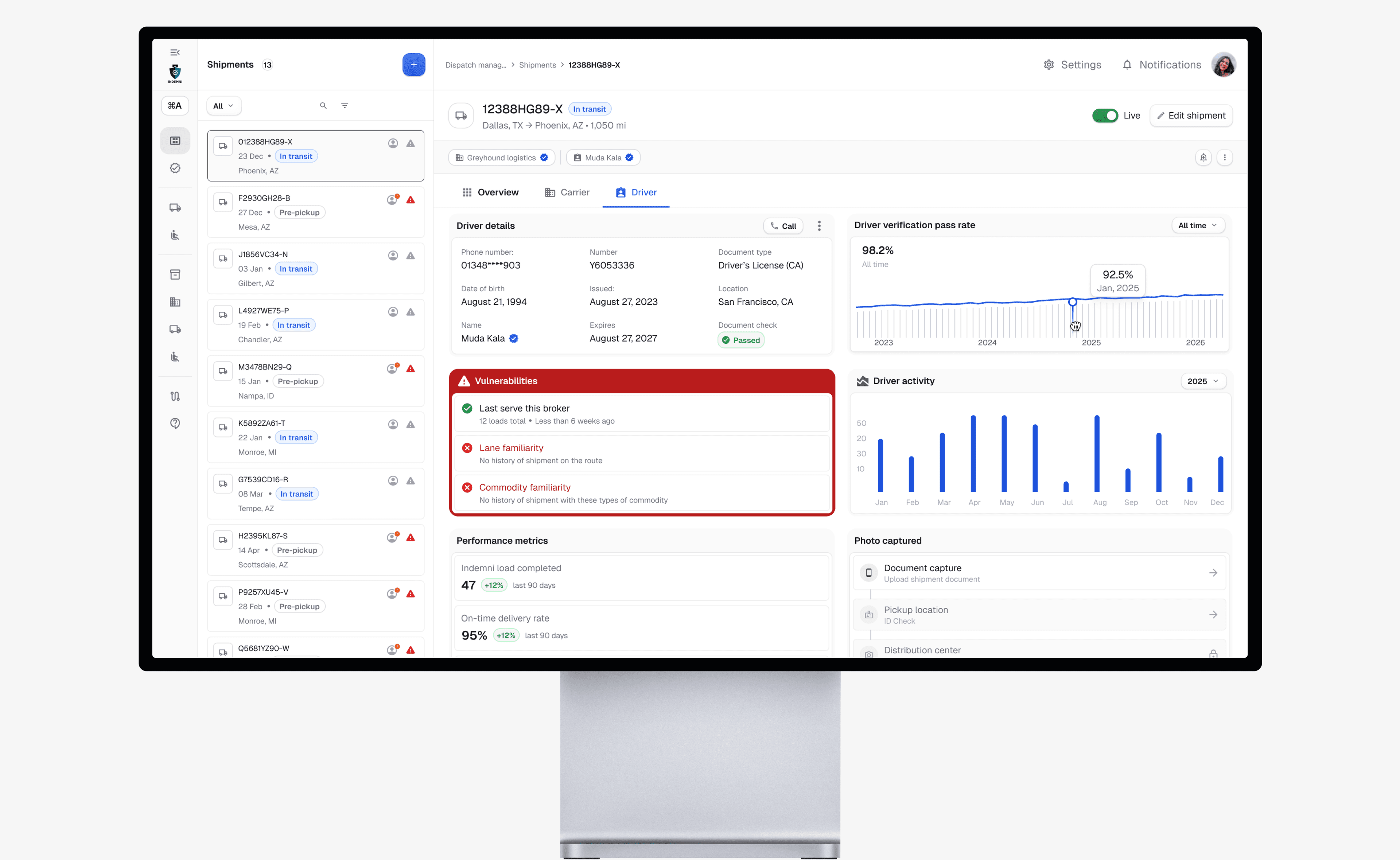
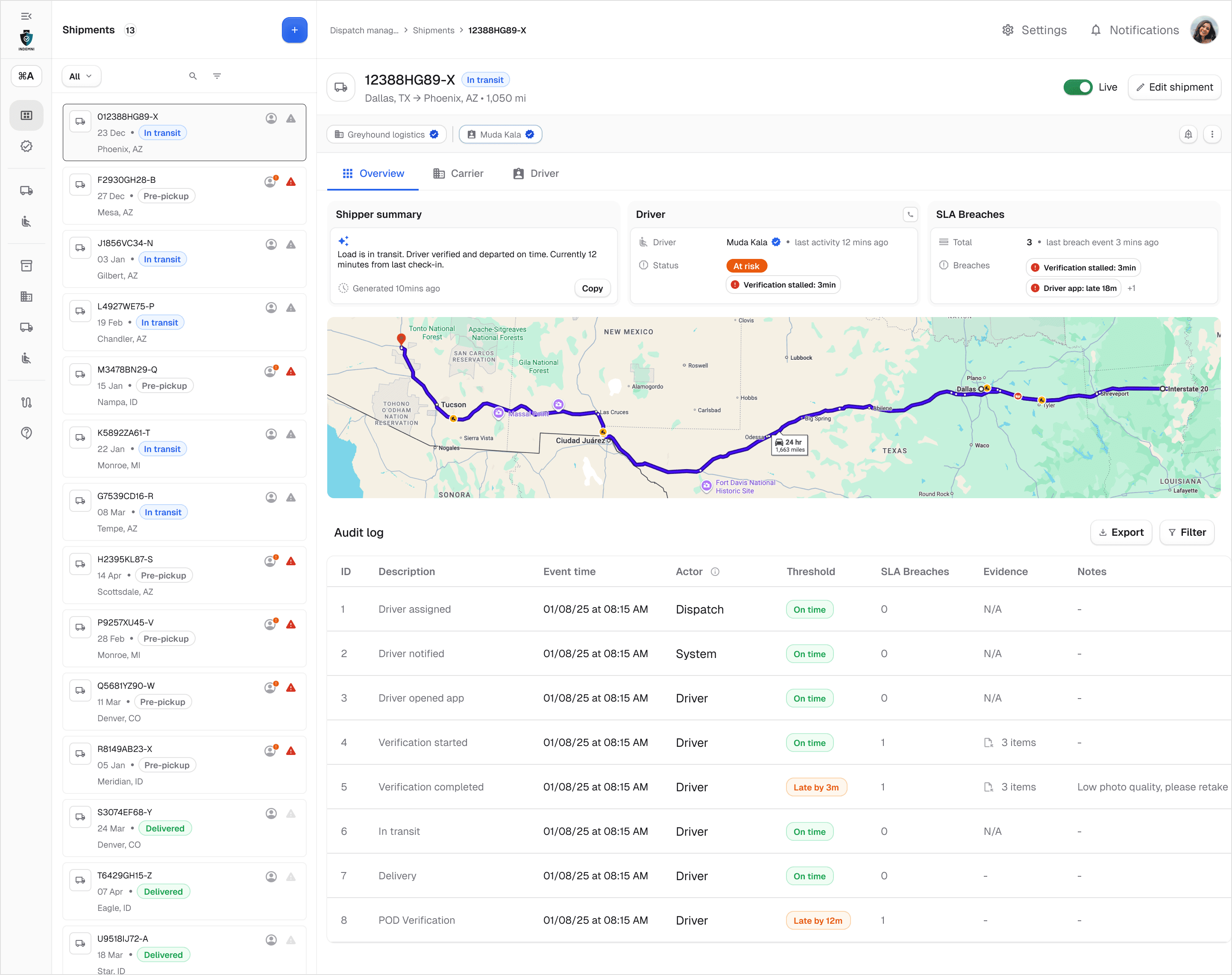
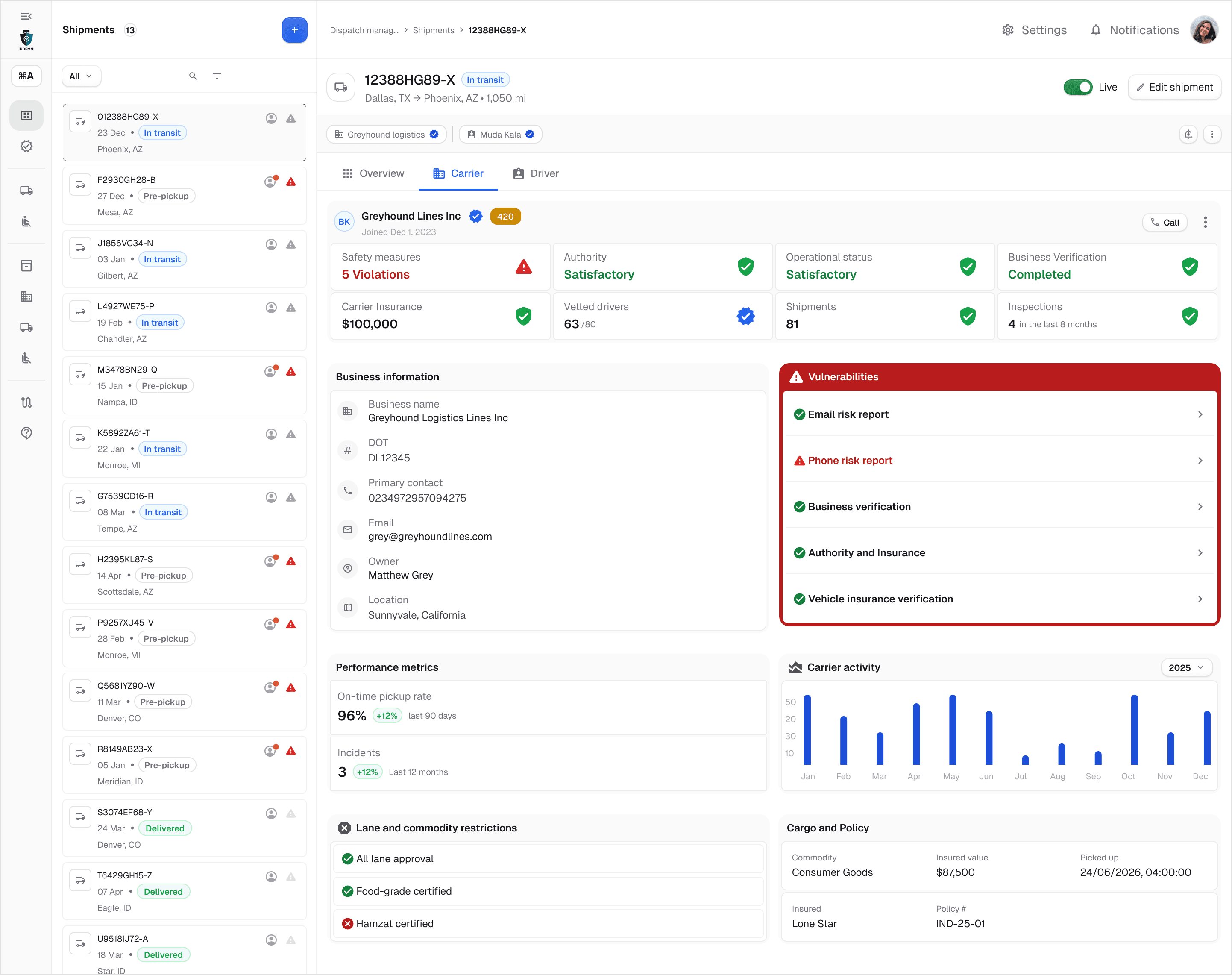
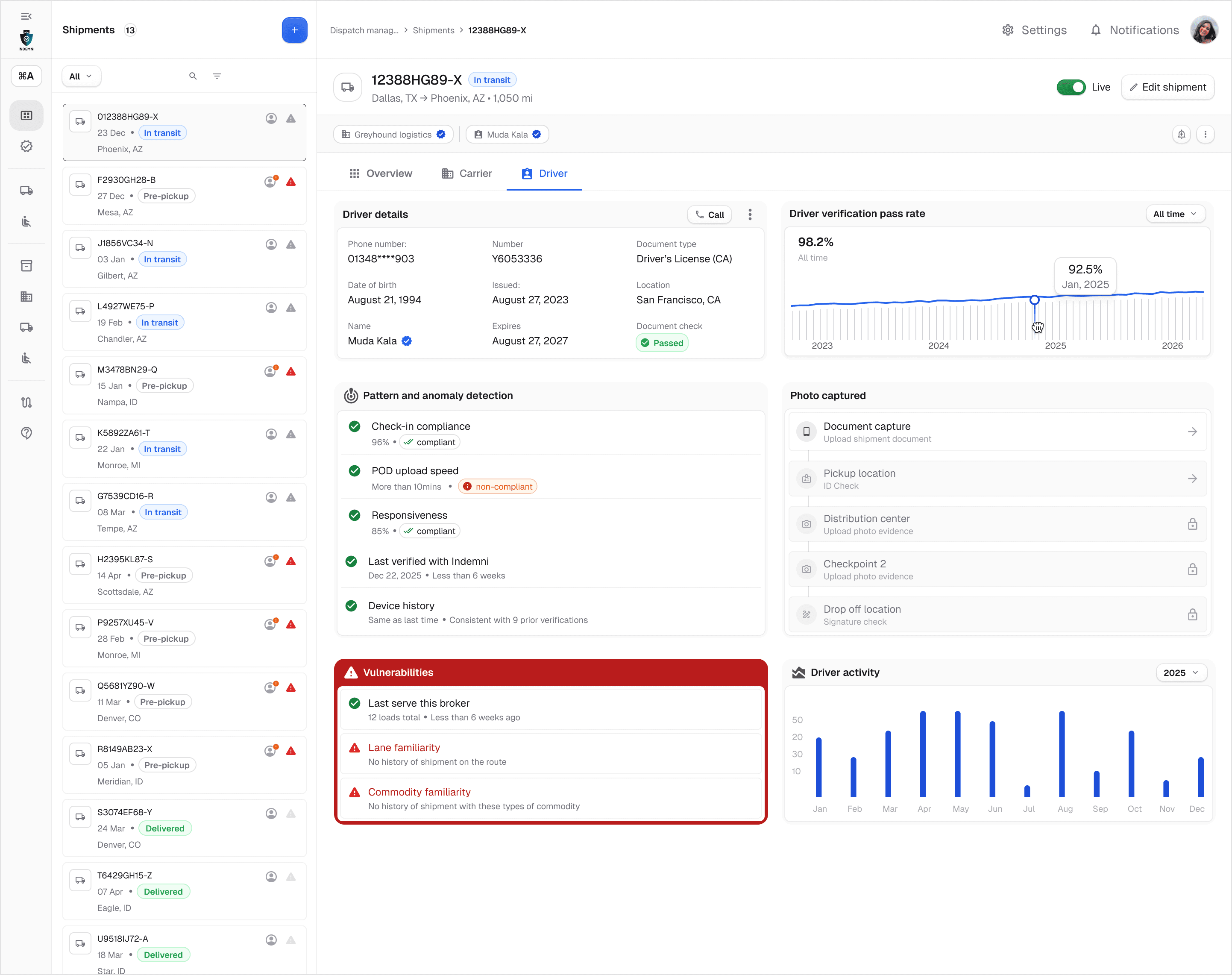
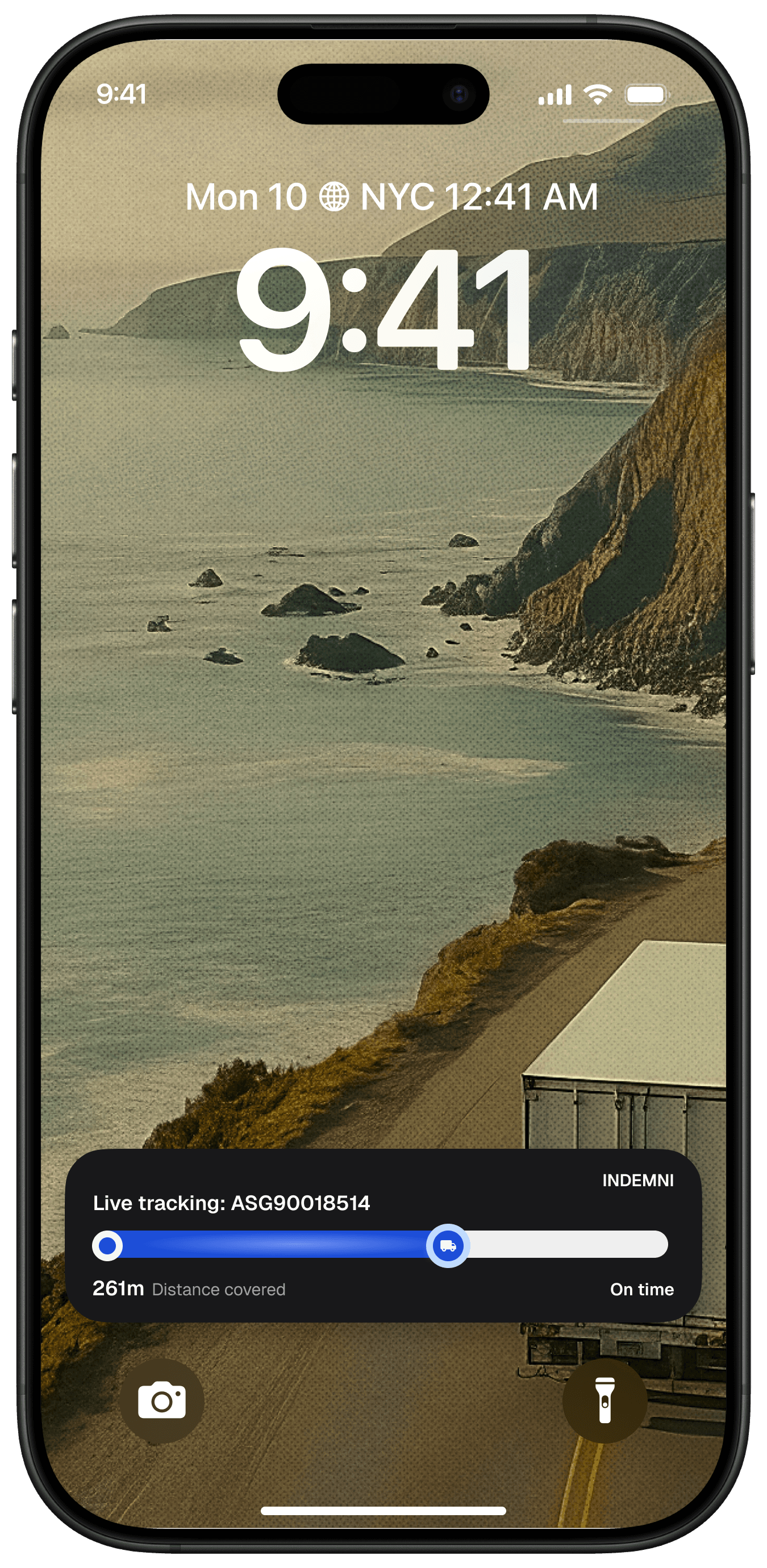
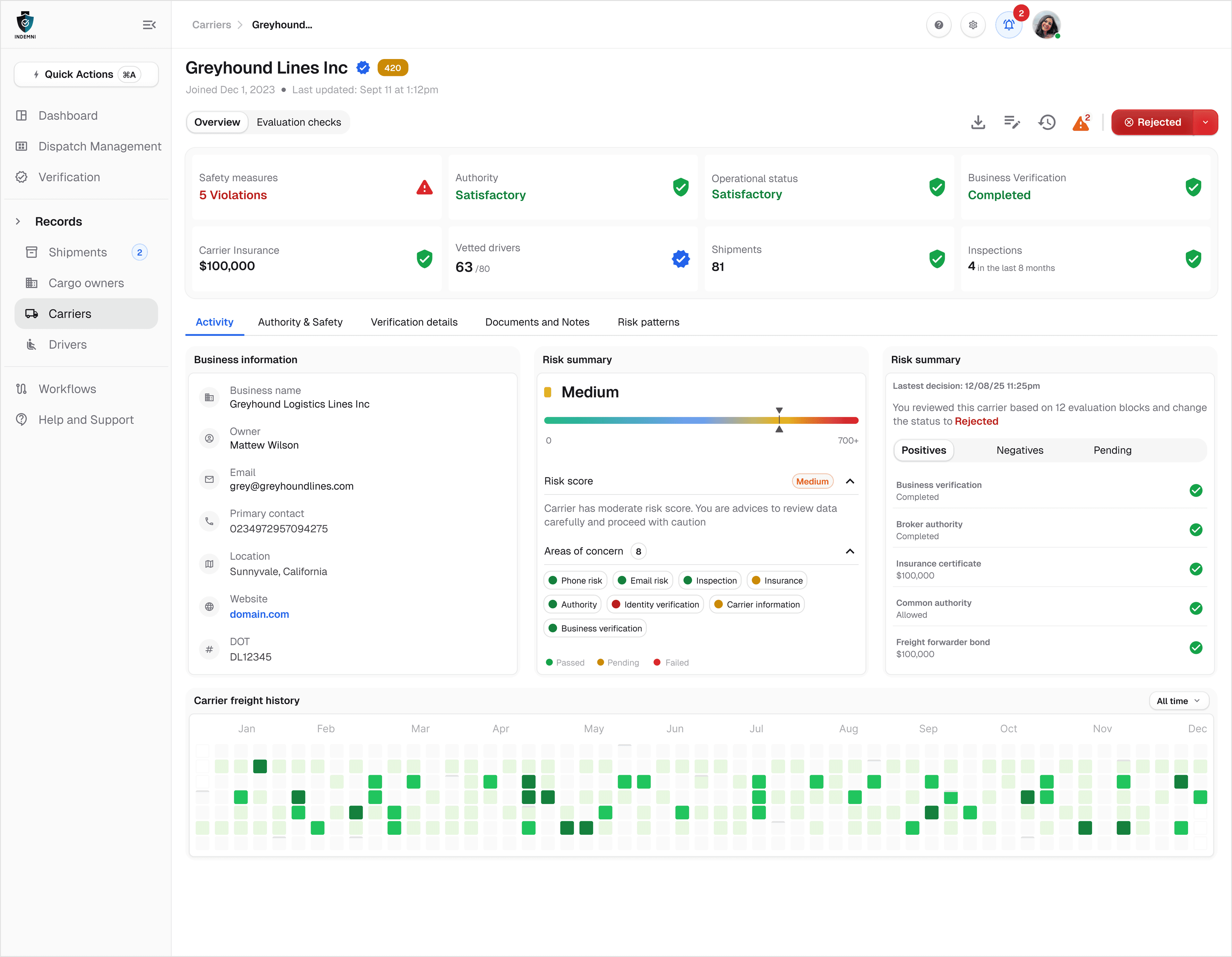
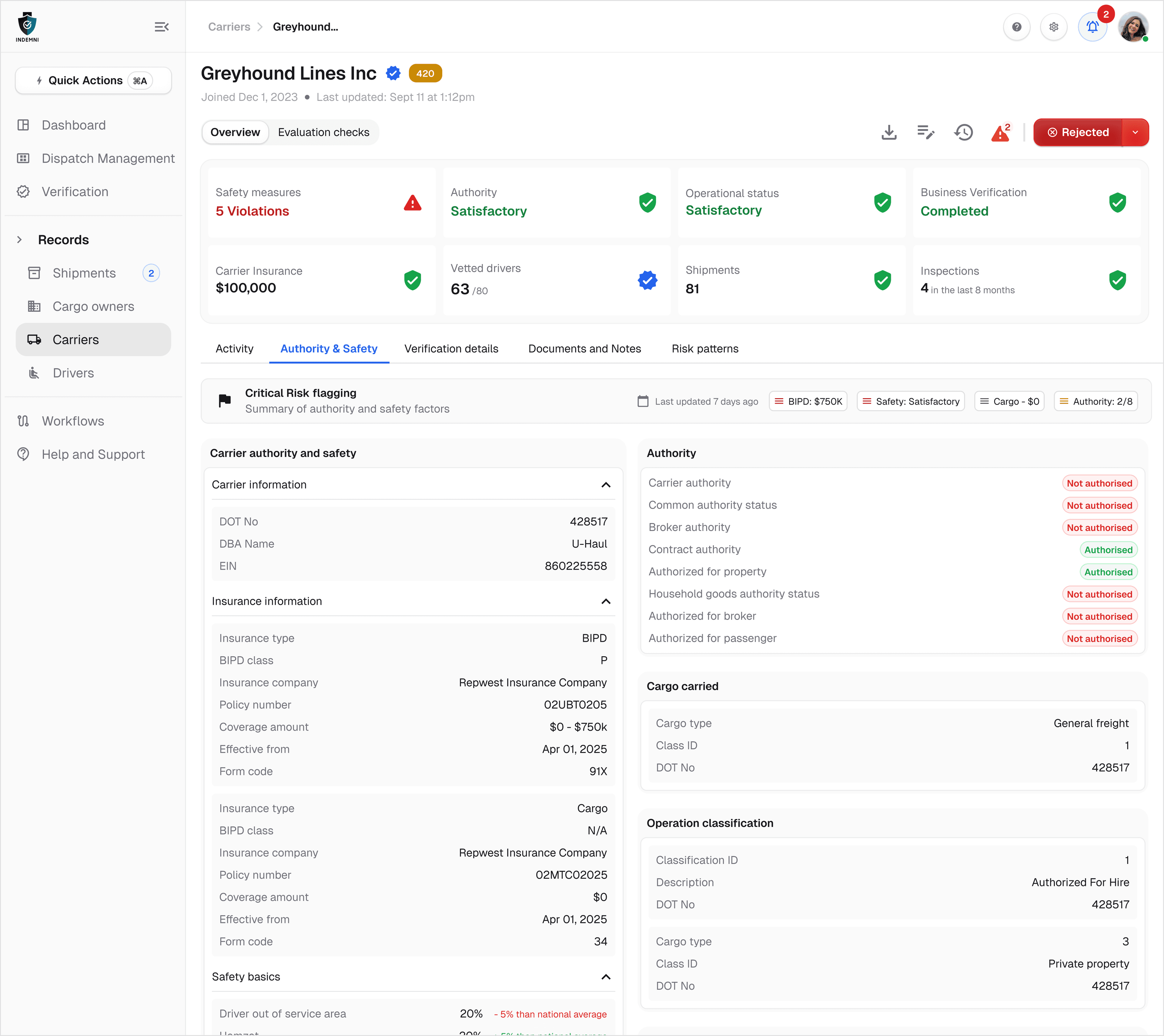
I designed the dispatcher experience around four jobs defined in research: triage fast, detect issues early, prove compliance, and intervene immediately. I introduced a risk badge system (green / amber / red) with a plain-language reason, SLA breach timers showing how long a stage had been stalled, and a one-click shipper update that replaced the manual call-and-draft process. Every event is captured in a milestone audit table with timestamped actors, evidence links, and exception notes, replacing tribal knowledge with a structured record any dispatcher can read cold.
Native driver app: one task at a time
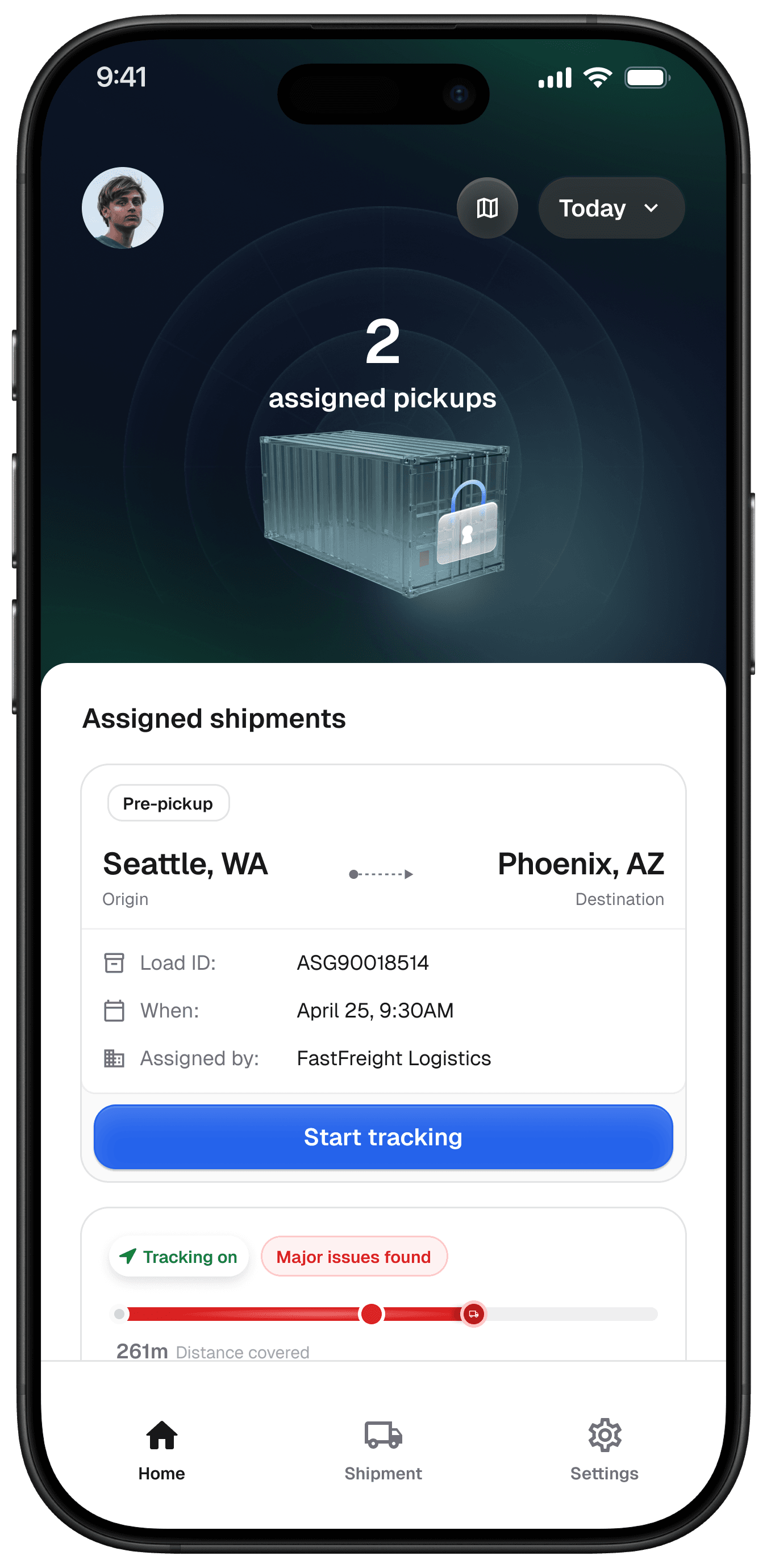
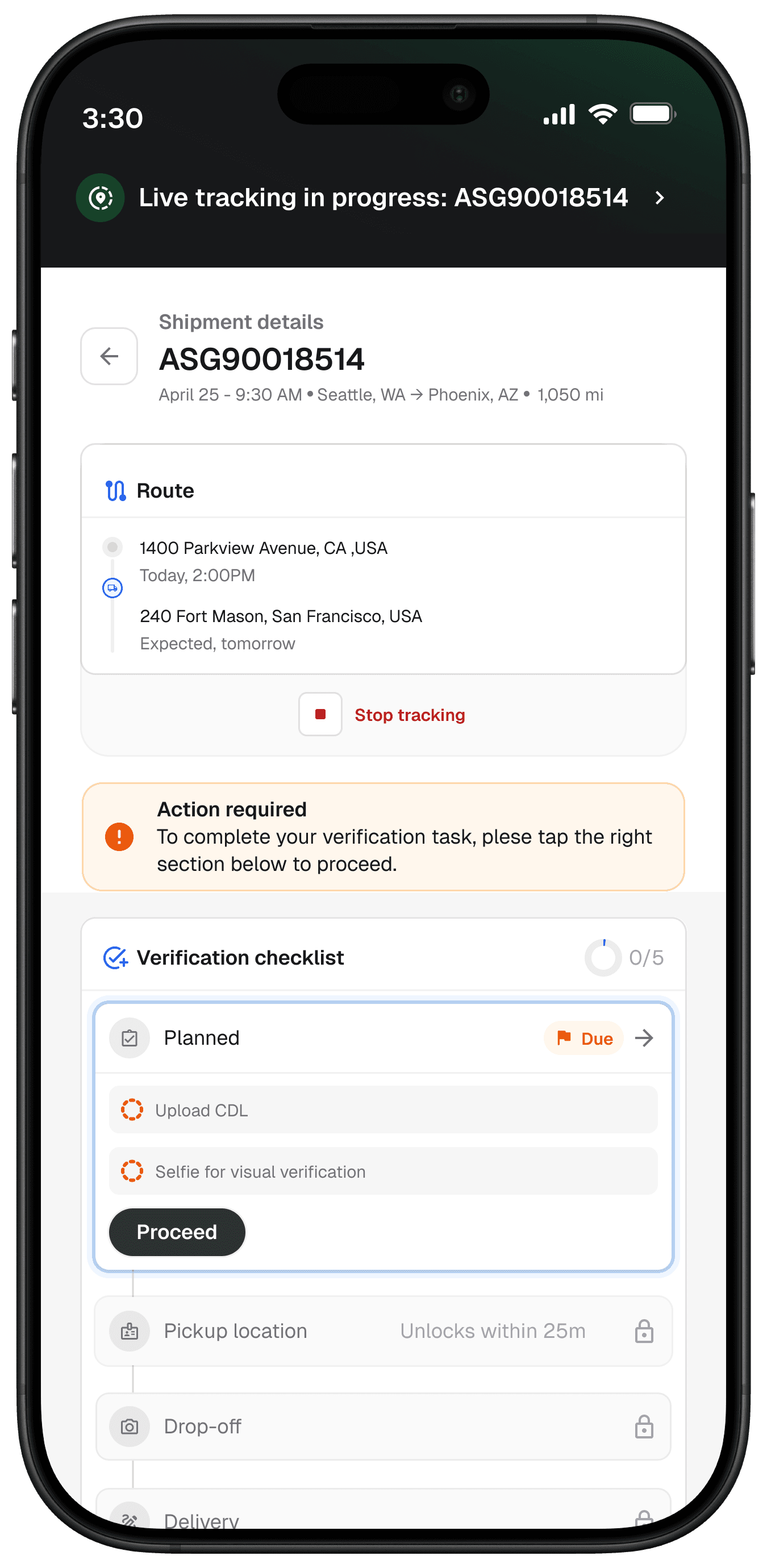
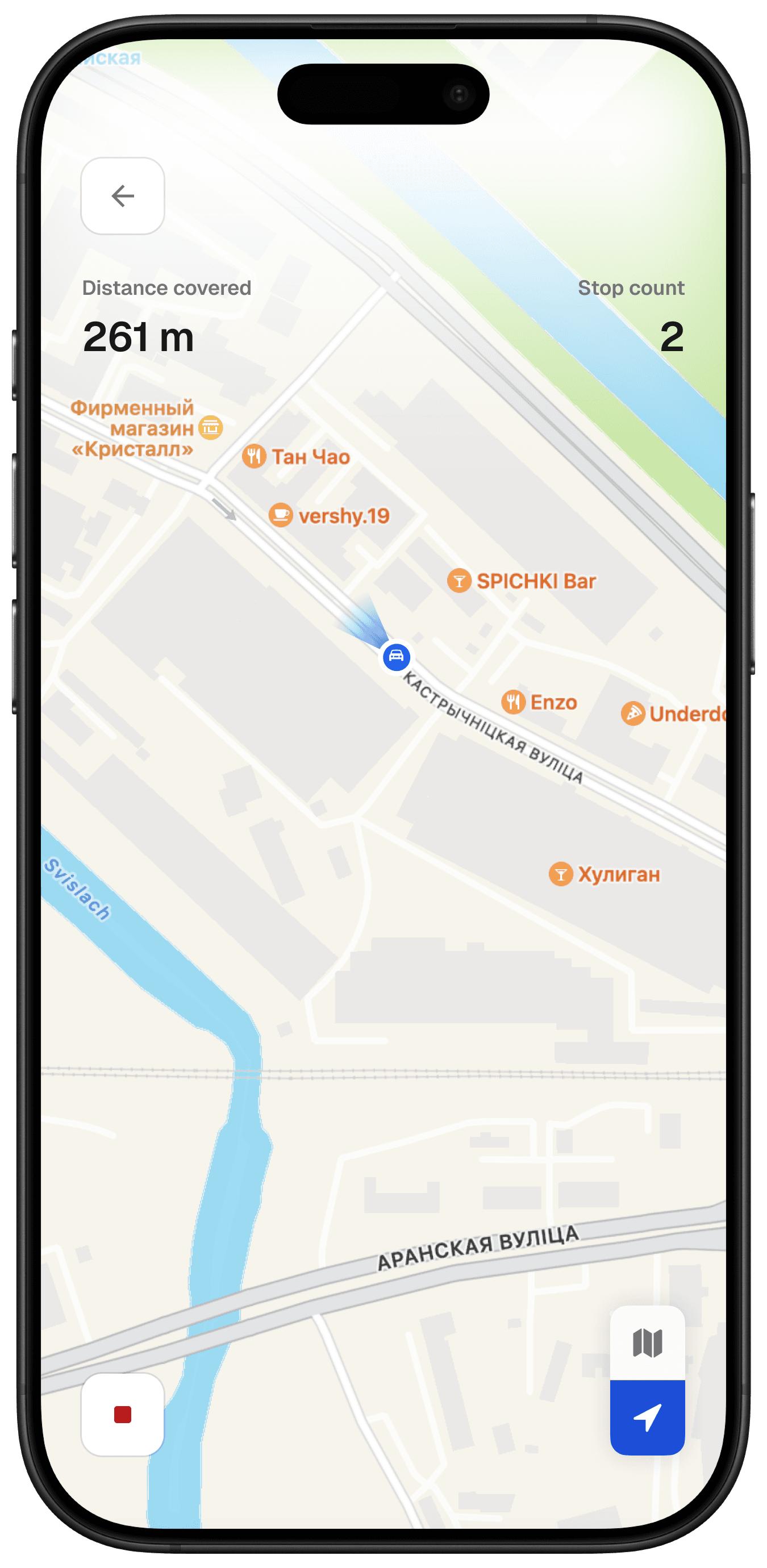
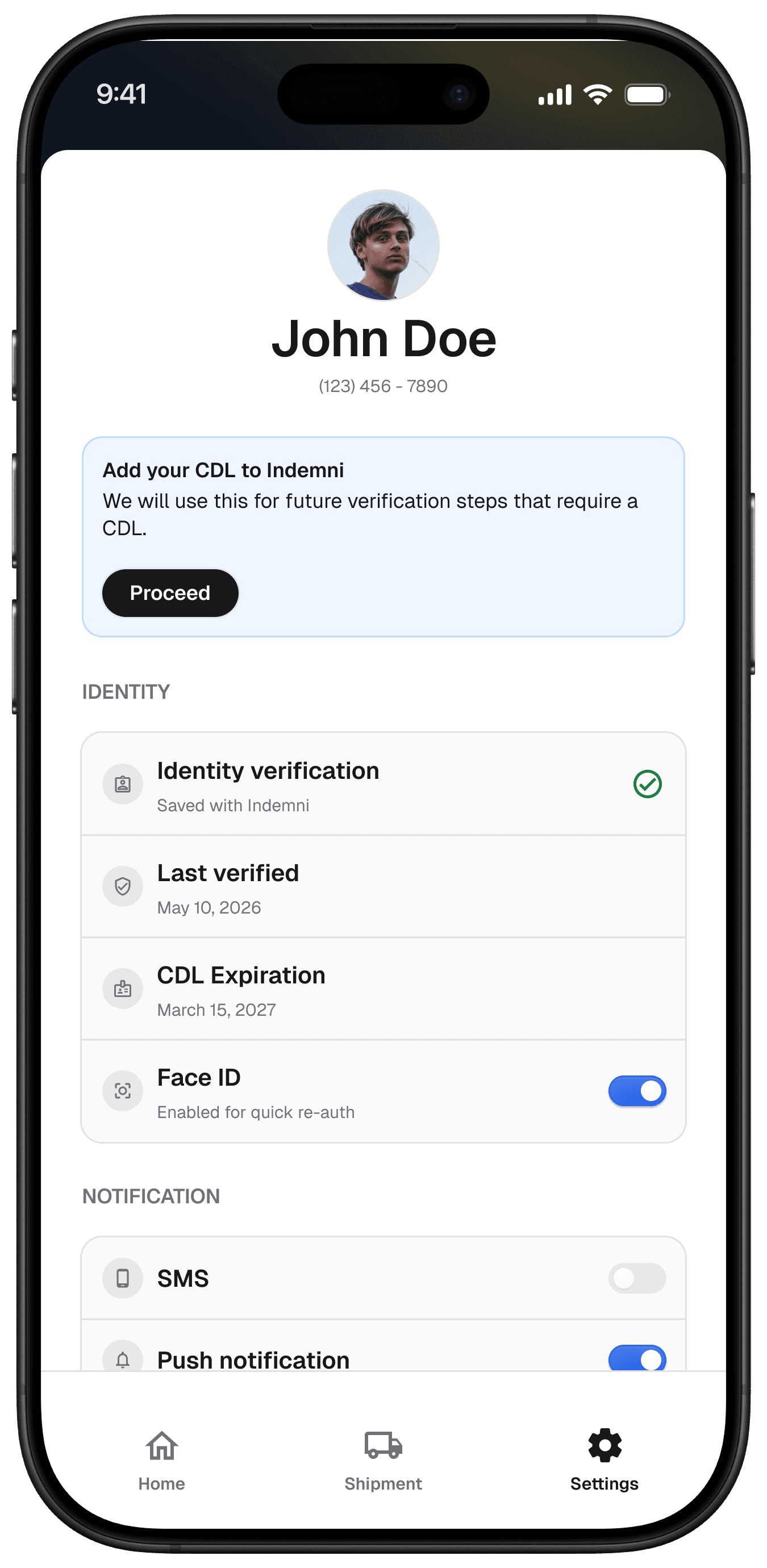
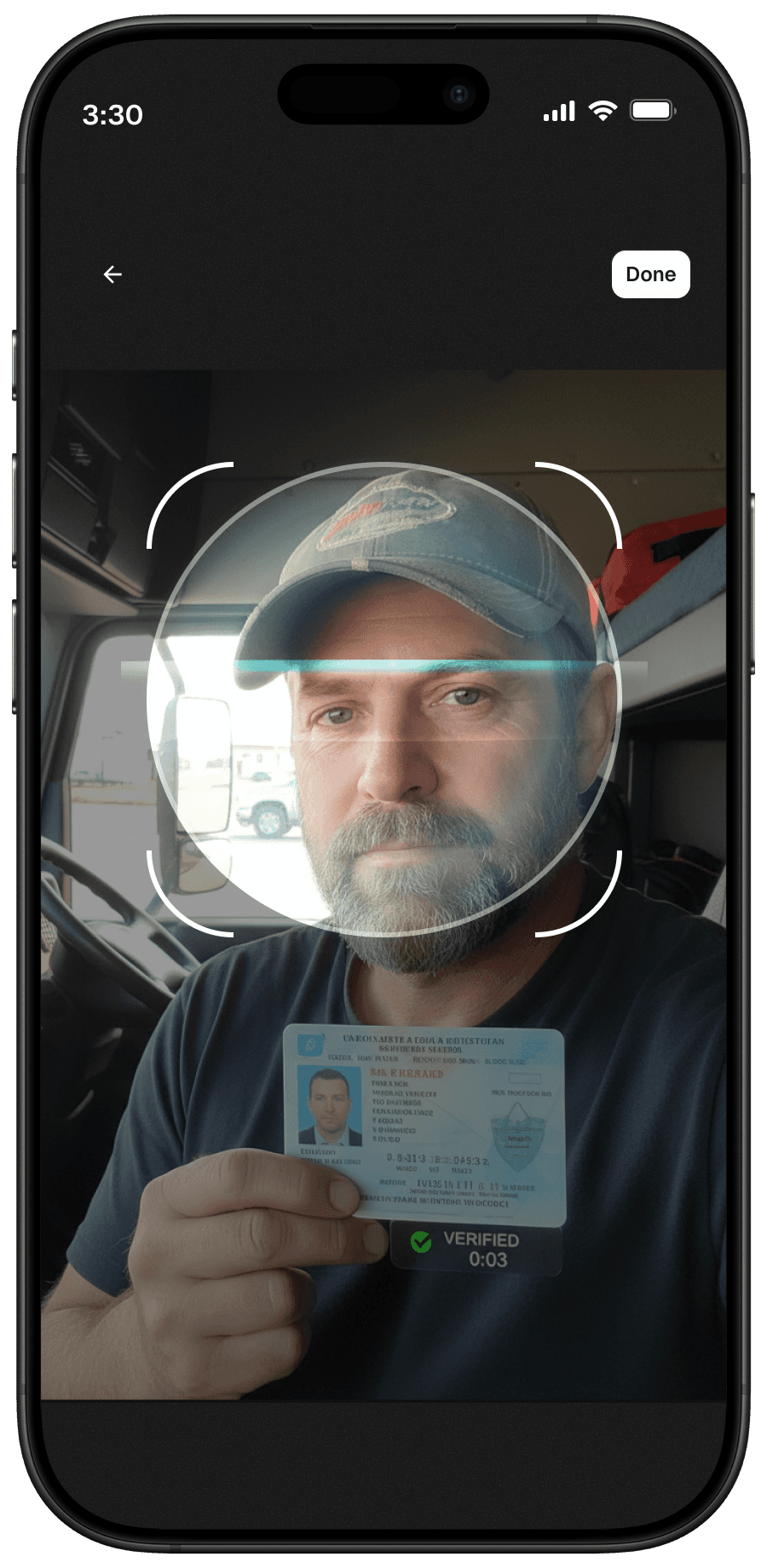
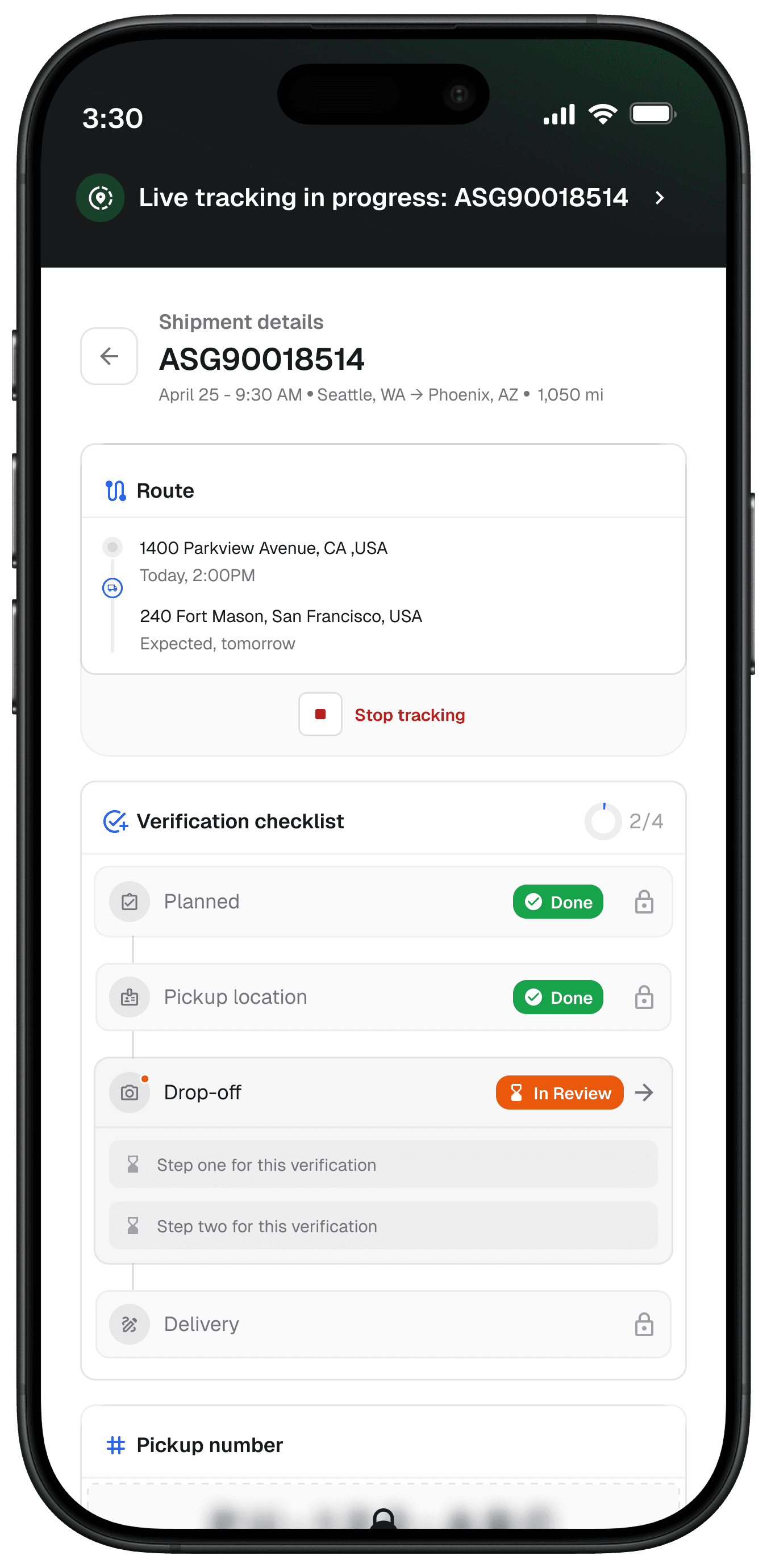
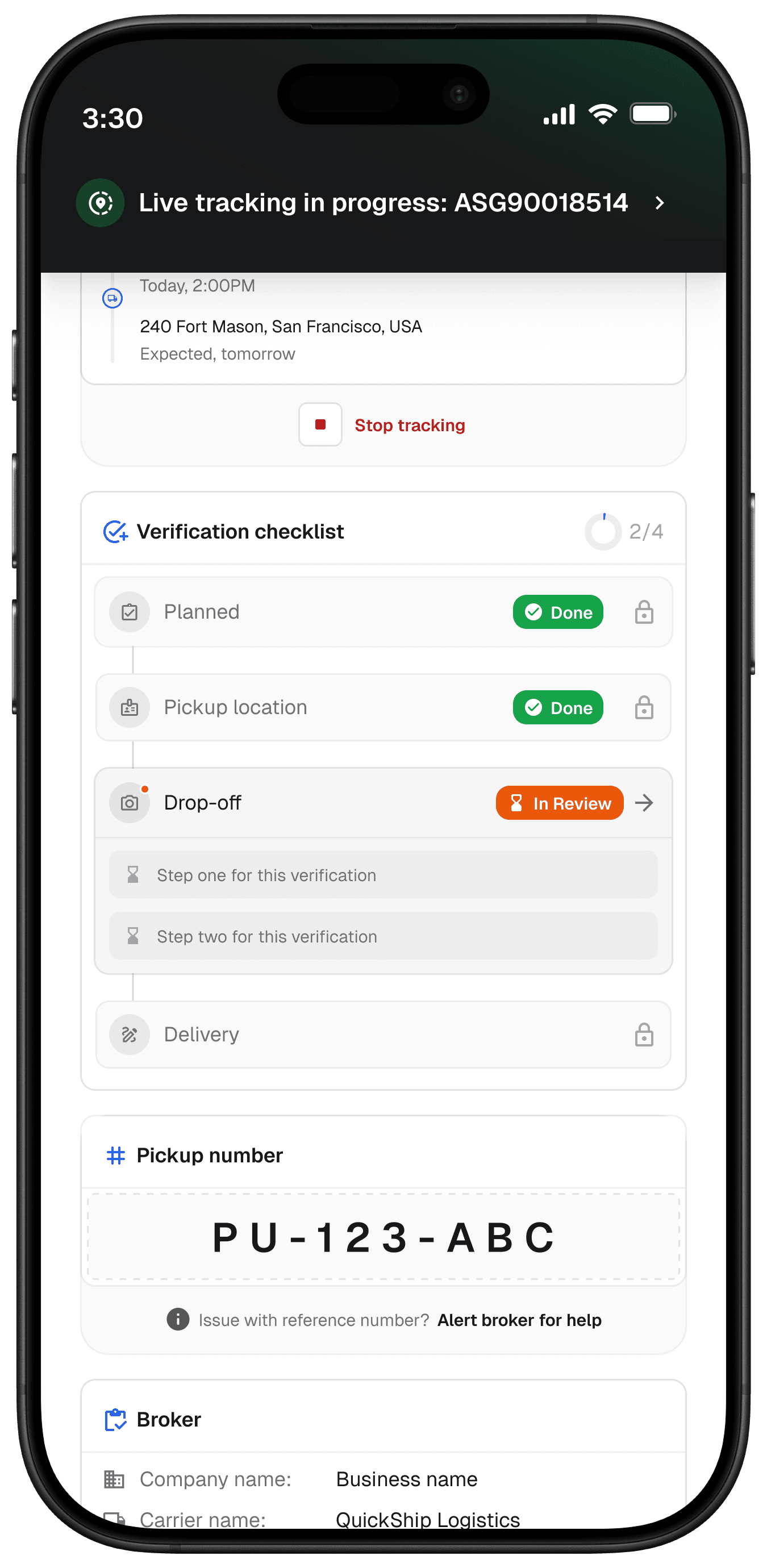
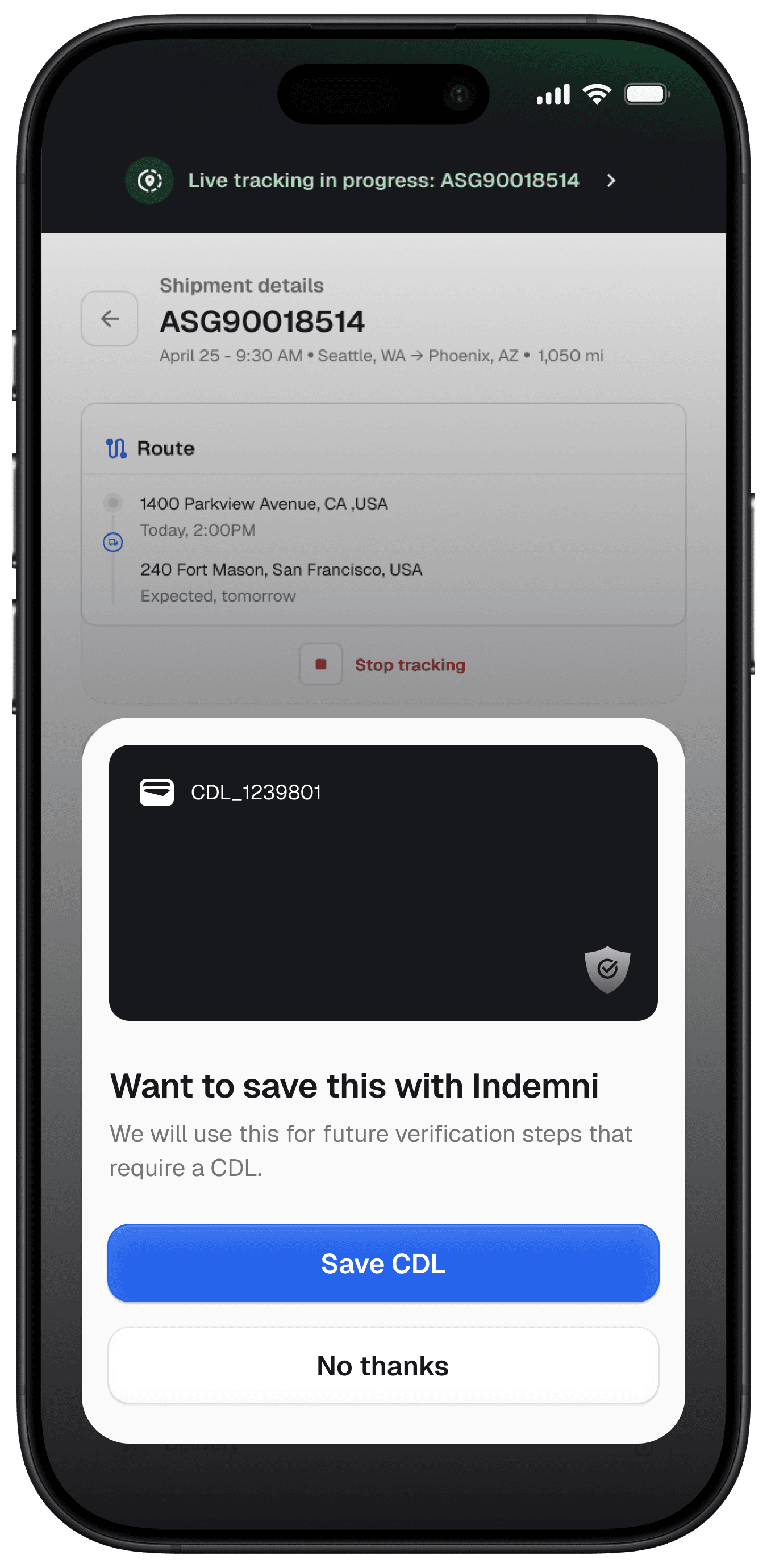
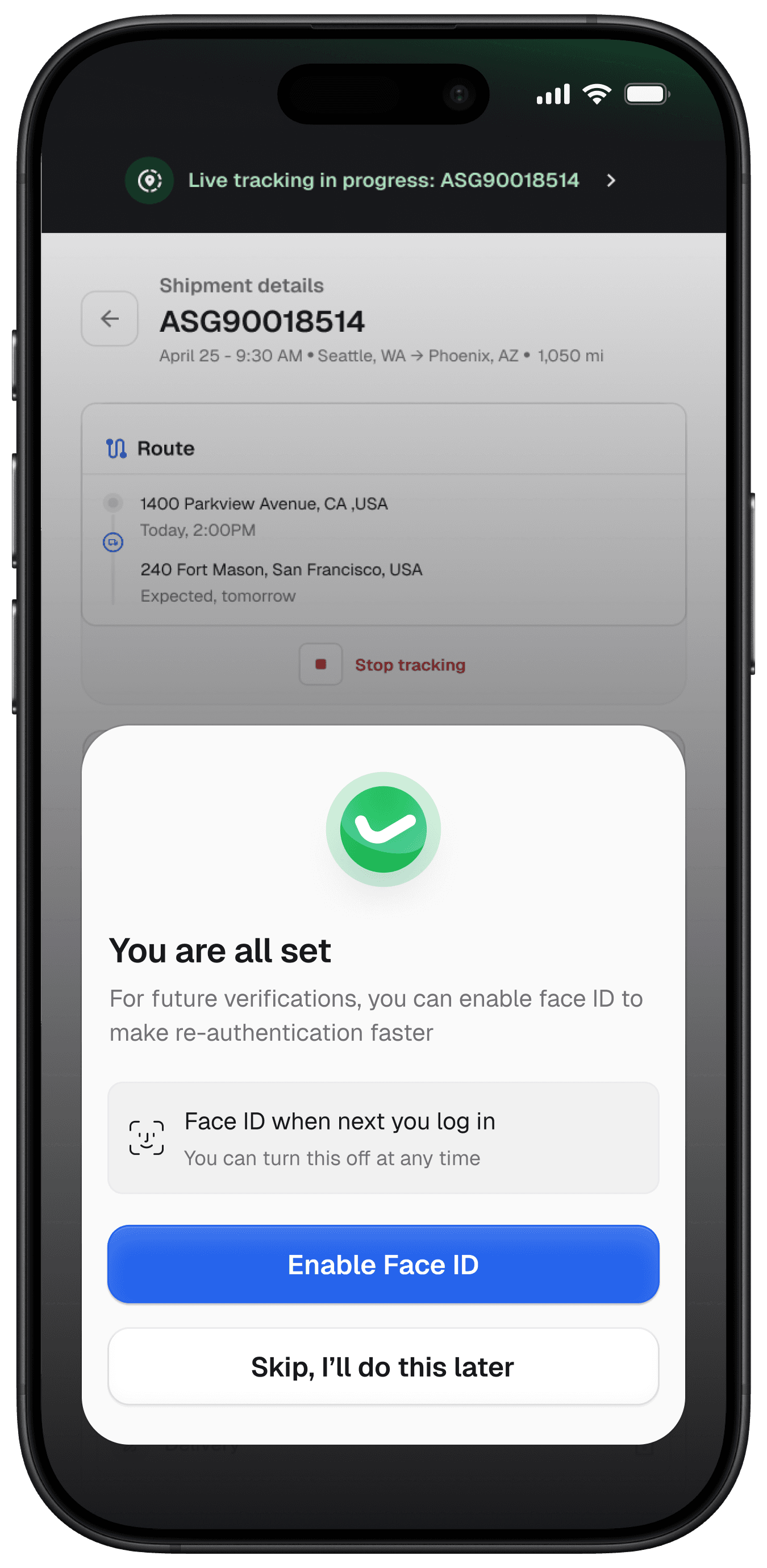
I built the driver app around a single principle: show the next required action, nothing else. After SMS-code login, the driver lands directly on their highest-priority task: start tracking, complete verification, or resume a stalled flow. Verification is checkpoint-gated by location proximity, so a driver cannot begin pickup verification until they are physically near the facility. For returning drivers, Face ID re-auth replaces a full CDL re-scan, making repeat compliance fast enough that drivers don't resist it.
Rate con and payment integrity: turning uploads into evidence
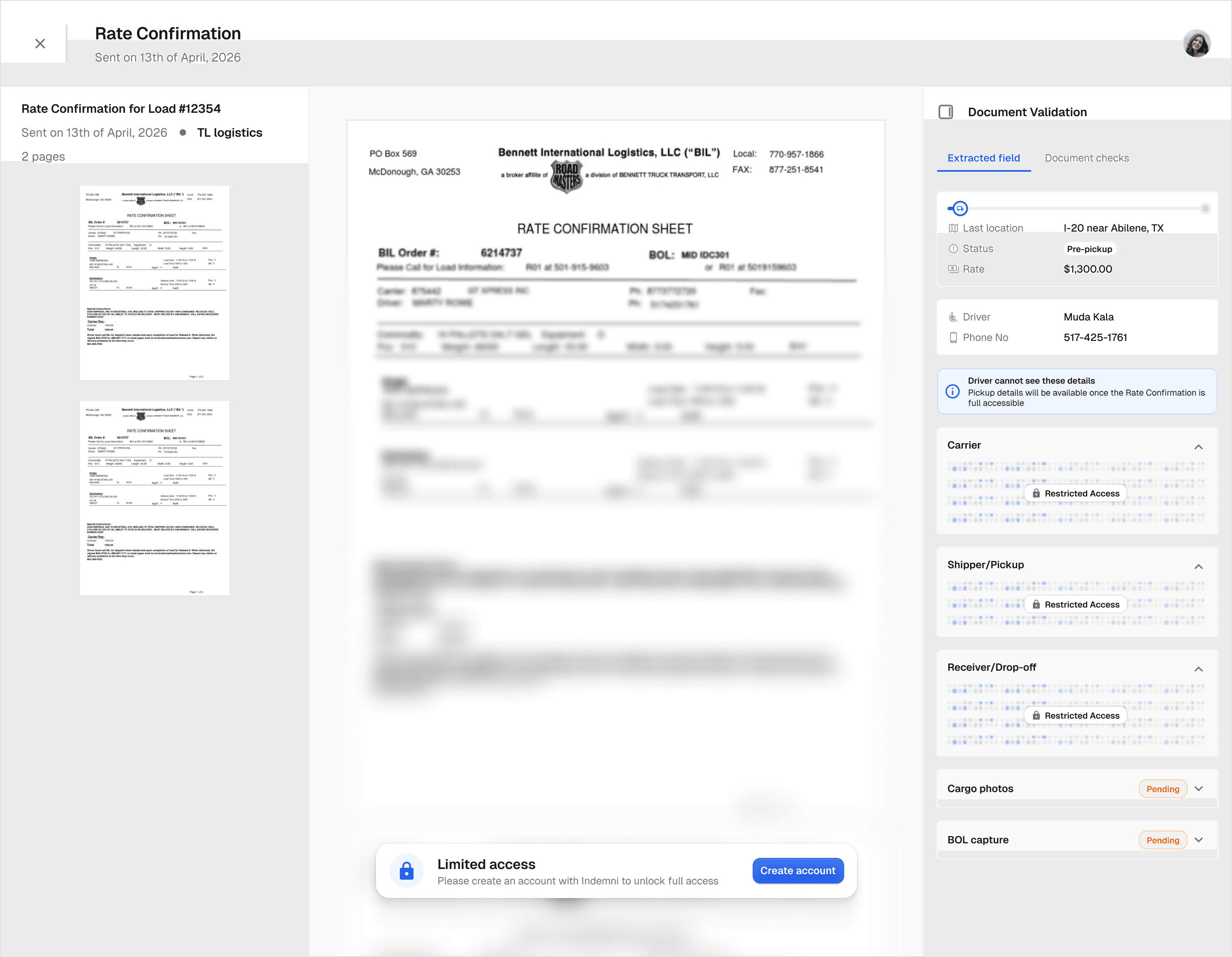
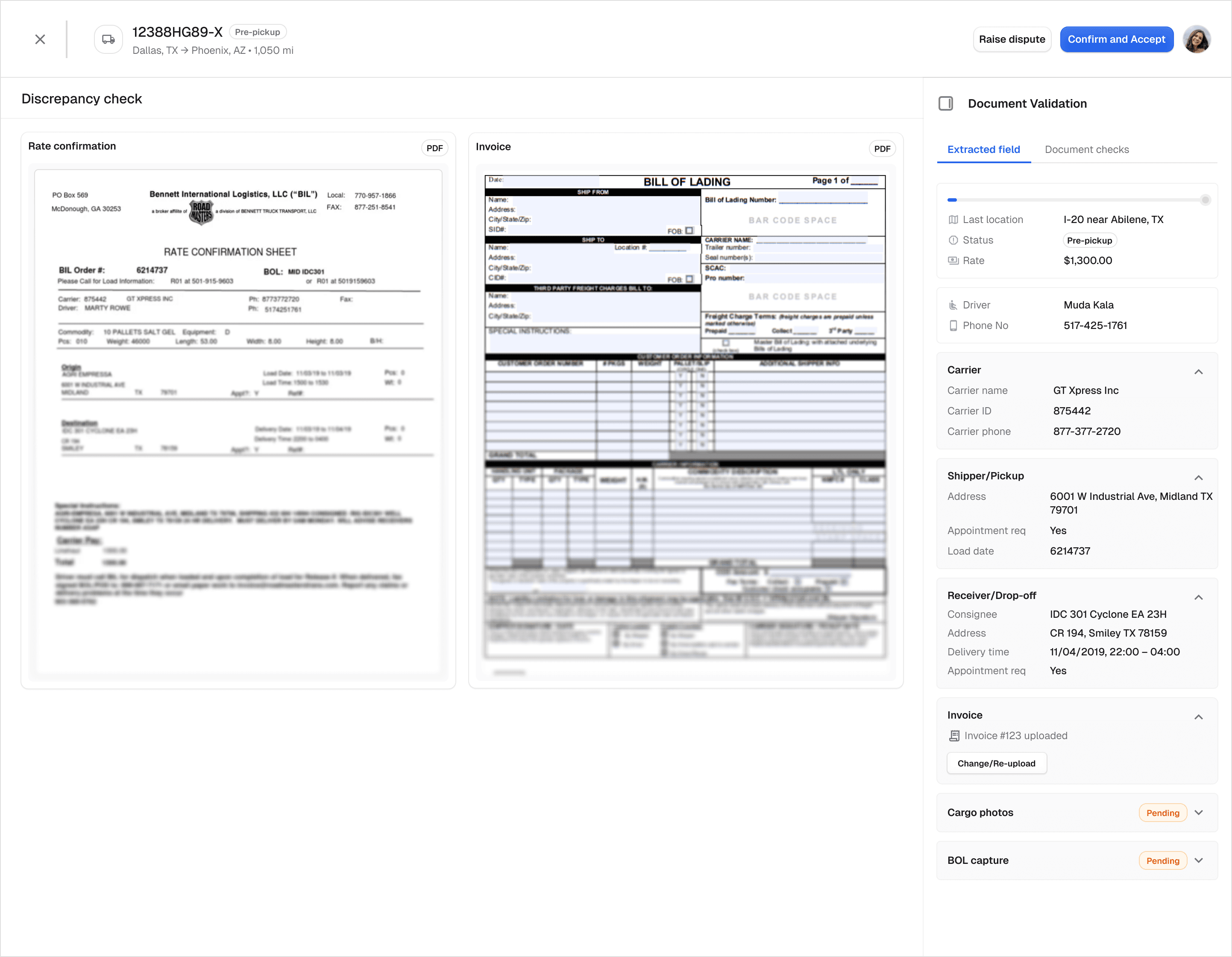
The rate confirmation step previously auto-passed the moment a file was uploaded. I redesigned it as a structured data capture: OCR extracts key fields (linehaul rate, detention terms, accessorial line items, addresses) and flags mismatches against the shipment record. At invoice time, those fields are matched against GPS-stamped arrival and departure timestamps, cargo photos, and BOL captures. Brokers can generate a dispute evidence package in one click rather than manually assembling PDFs.
Key design decision
The gate that made driver adoption non-optional
The hardest problem was behavioural: drivers needed to complete verification for the system to work, but enforcement was entirely on the broker. I identified that the thing drivers needed most (pickup instructions, reference numbers, and appointment details) could only be released once verification was complete.
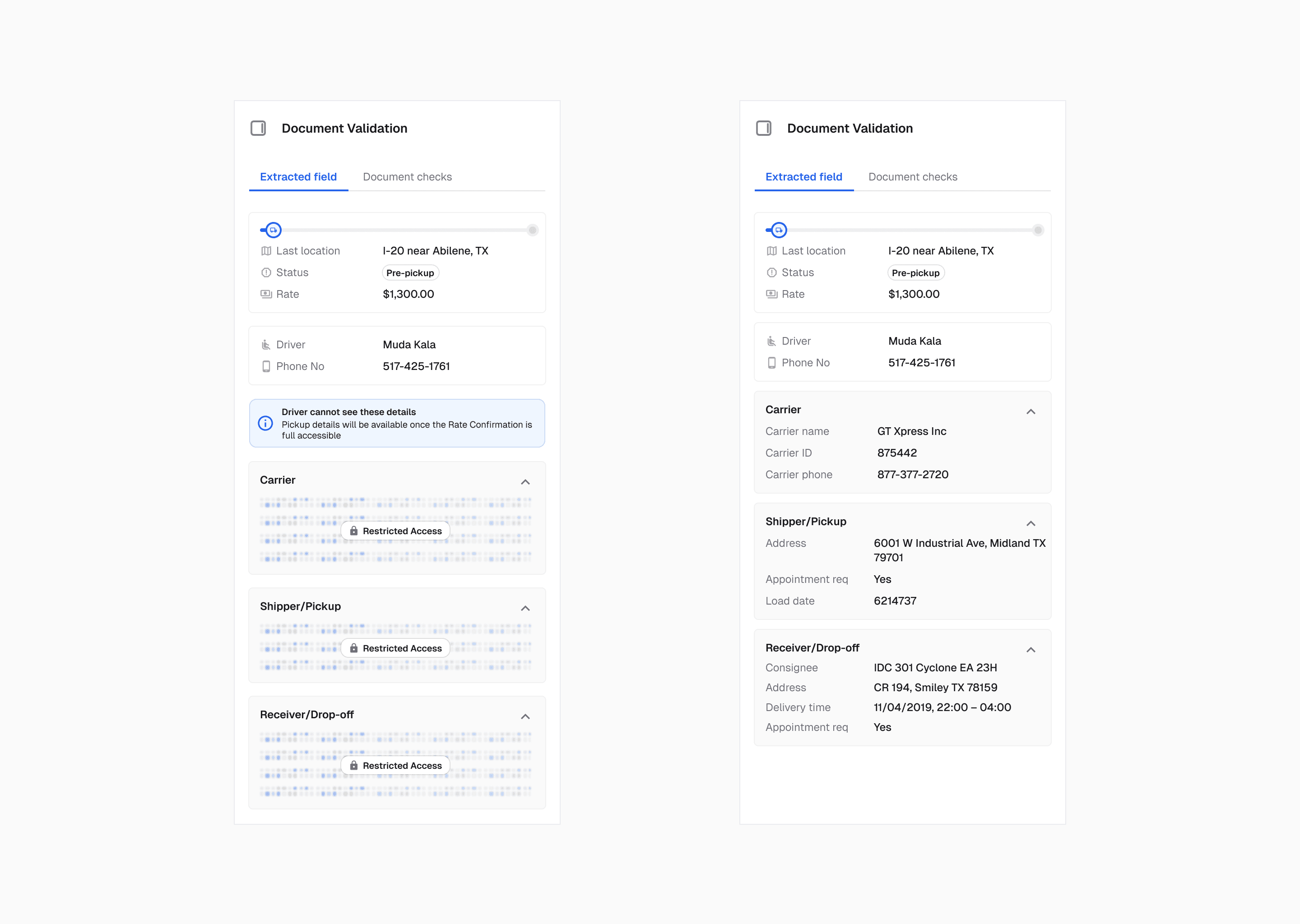
I designed this as a deliberate information gate. Pickup details are locked behind verification completion, so the broker no longer has to chase drivers for compliance. Drivers comply because the information they need is on the other side. This turned a top-down enforcement problem into a pull mechanic, and it became the core adoption driver for the platform.
Design decisions made
- Task-first mobile routing
- Location-gated checkpoints
- Face ID re-auth for returning drivers
- Pickup details gated on verification completion
Outcomes
Each outcome traces back to a deliberate design decision, not a feature shipped, but a problem reframed.
Replacing gut-feel triage with a risk signal system
Dispatch platformI introduced colour-coded risk badges with plain-language reasons and SLA breach timers per milestone, so any dispatcher, not just the most experienced one, could read the status of a load in seconds without making calls or digging through notes.
Result: < 5 seconds to triage any active load, down from 5–10 minutes of calls and system-jumping.
Gating pickup details behind verification completion
Driver appI designed pickup instructions, reference numbers, and appointment details to be locked until the driver completed verification. This removed the need for brokers to enforce compliance manually: drivers complete the flow because the information they need is on the other side.
Result: Self-enforcing compliance loop, where drivers opt in because the gate serves them, not just the broker.
Turning a dead upload step into a structured evidence object
Payment auditThe rate con had been auto-passing on upload with no data extracted. I redesigned it to parse structured fields and match them against GPS timestamps and cargo photos at invoice time, giving brokers a one-click dispute evidence package instead of a manual PDF assembly job.
Result: $120K+ monthly invoice leakage recoverable for a mid-size broker at 6,000 loads per month.
“The platform lets us make compliance the reason shippers choose us, not just a back-office checkbox.”
Operations Manager, Nolan Transportation Group
Open to new projects and ideas
Building something in AI, finance, or complex workflows? I'd love to hear what you're working on.
Send email